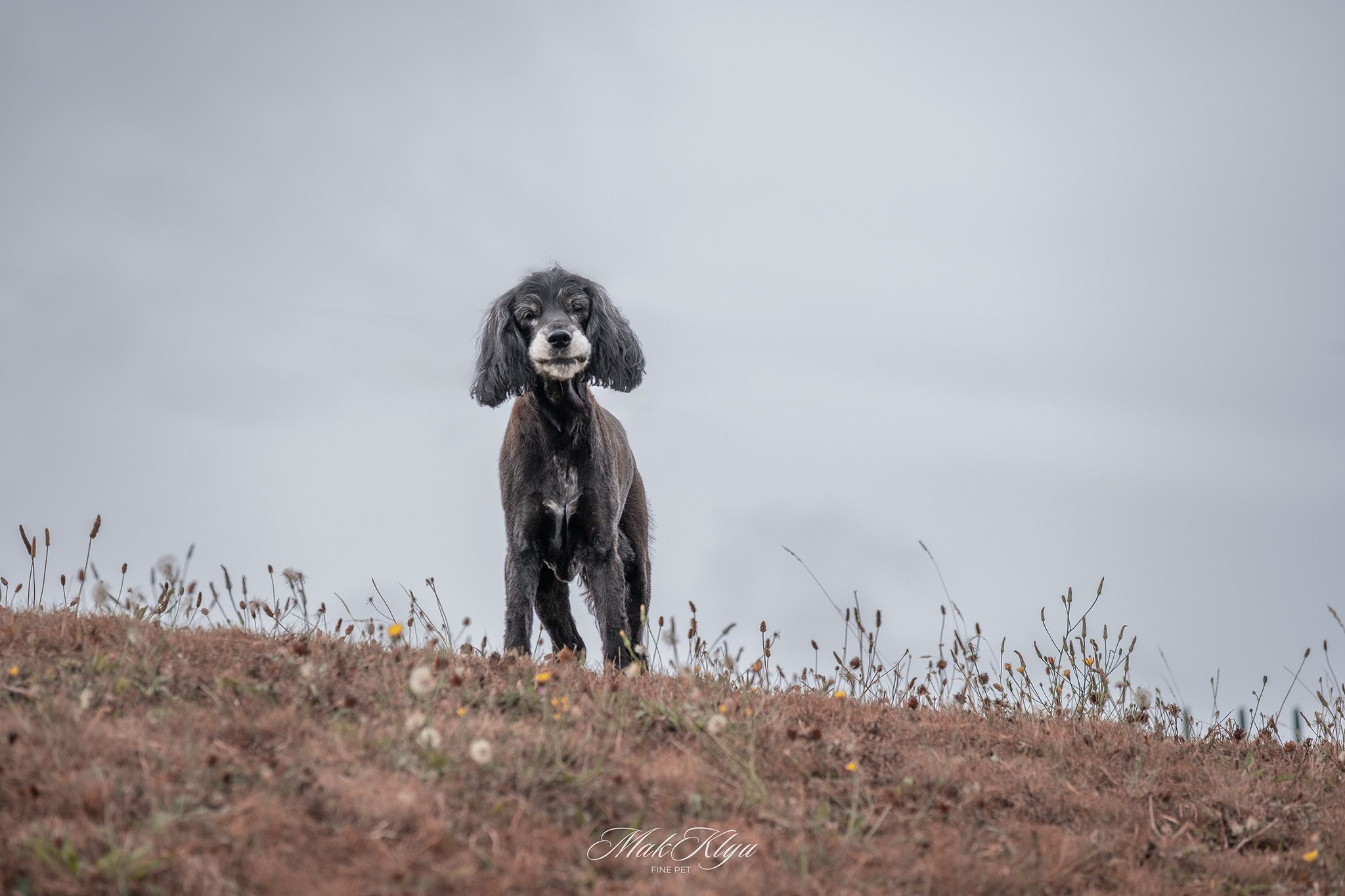
Photographing animals in nature begins long before an animal enters the frame.
It begins with learning to read the landscape: the direction of the light, the distance between forms, the movement of water, the texture of stone, and the small signs of life that might otherwise remain unnoticed.
A quiet coast offers time for this kind of attention.
At first, the scene may appear almost empty.
Sea, sky, and distant land seem to hold very little.
But the longer we remain, the more the landscape begins to reveal.
A line of rocks interrupts the water.
Flowers rise above the shore.
A bird appears between stones.
Another pauses and looks directly toward the camera.
The subject does not suddenly arrive in an empty setting.
It becomes visible within a world that was already alive.
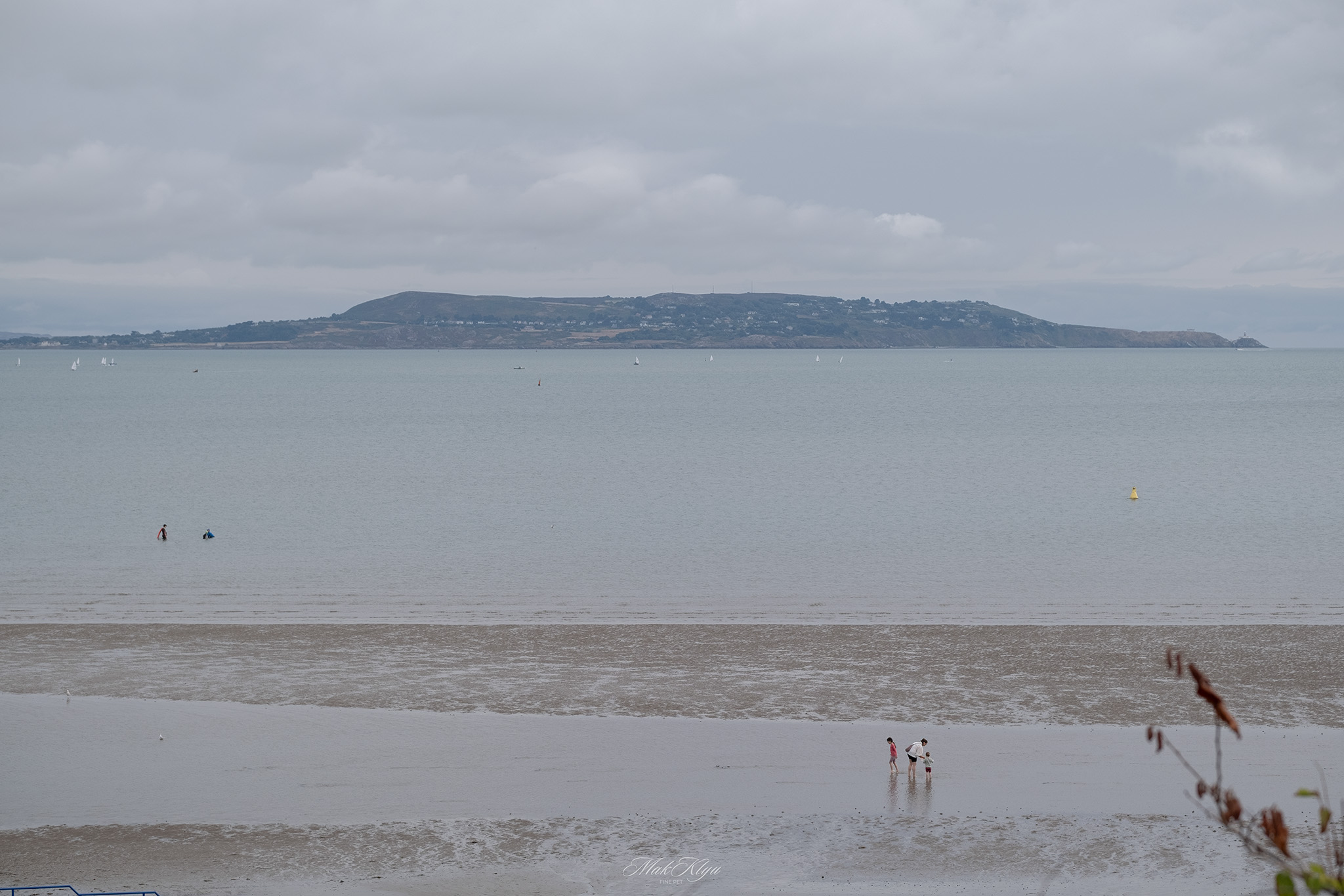
Before the Subject Appears
A wide landscape teaches the photographer not to search too quickly for a central figure.
When we arrive with the expectation that something must immediately happen, we often overlook the structure already present in the scene.
The horizon establishes calm or tension.
Open water creates distance.
A narrow strip of land gives the eye a place to rest.
Even an overcast sky changes the emotional weight of everything beneath it.
This attention matters when photographing animals outdoors.
A dog may enter the frame only for a few seconds, but the landscape has already determined how that moment will feel.
Will the animal appear small and independent within a wide space?
Will trees create a sense of shelter?
Will a path suggest movement?
Will the light separate the subject gently from the background?
The portrait begins before the animal is visible.
Photographing Animals in Nature Begins with the Landscape
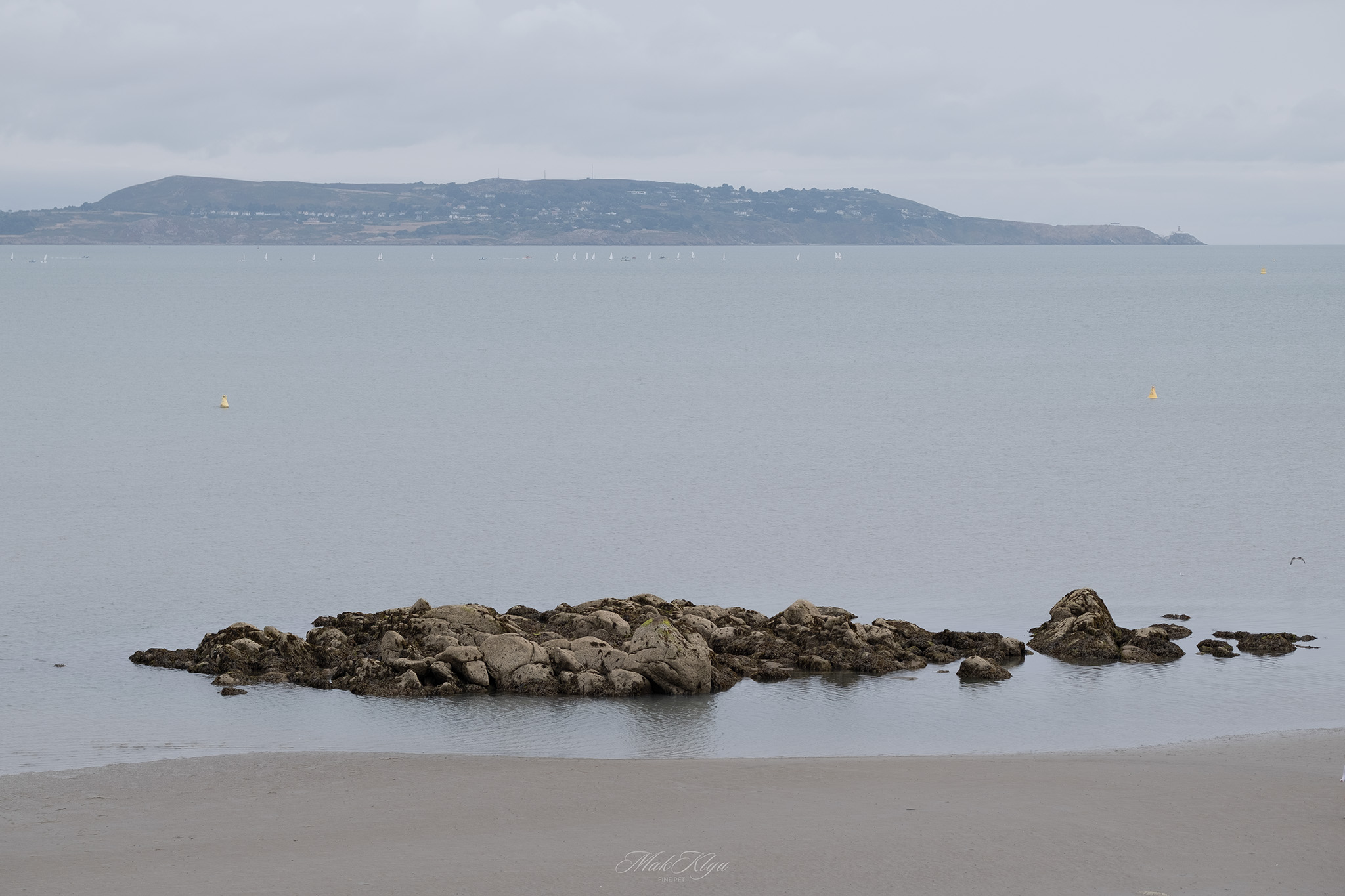
A simple coastal formation can teach us more about composition than a scene filled with obvious subjects.
A low group of rocks surrounded by calm water creates balance through restraint.
Nothing demands attention loudly, yet the eye is naturally drawn toward the shape.
Its position, scale, and relationship with the distant shore are enough to hold the frame together.
The same principle applies to an outdoor animal portrait.
The subject does not need to fill the image.
It needs to exist in a meaningful relationship with the space around it.
A dog standing at the edge of a field, beneath a tree, or at the end of a path can become visually powerful when the surrounding lines support its presence.
Composition is not created by making the animal larger.
It is created by understanding where the animal belongs within the scene.
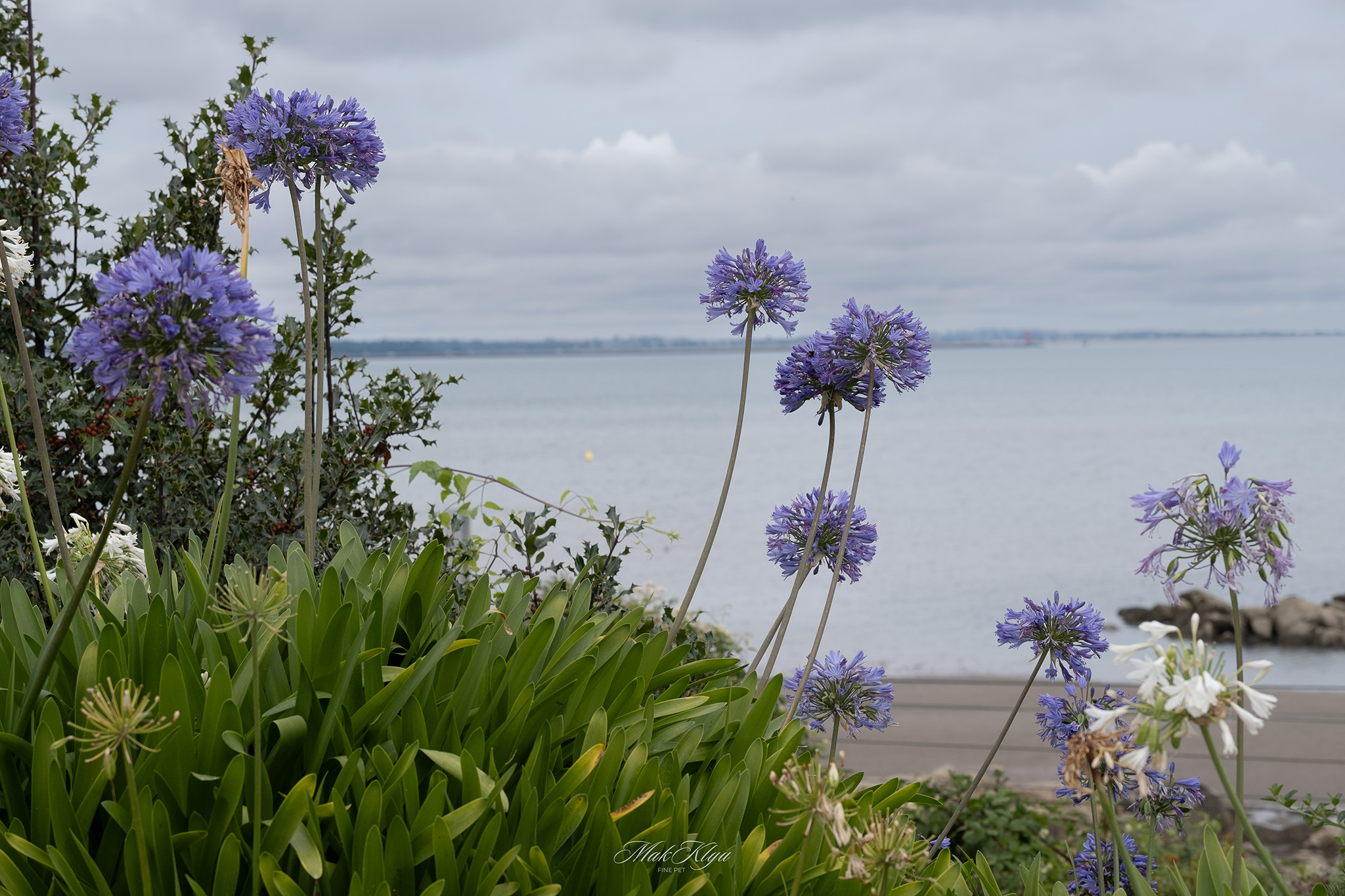
Learning to Notice What Is Small
Observation changes when we stop looking only toward the horizon.
Along the coast, purple flowers rise above the water and bring colour into an otherwise restrained landscape.
They do not compete with the sea.
They create a transition between the immediate foreground and the distance beyond it.
Small details often carry the emotional tone of a photograph.
A few flowers can make a cold scene feel gentle.
New leaves can suggest change.
Dry grass can introduce fragility.
Moss on stone can reveal how long a place has remained undisturbed.
Sometimes the most meaningful detail is even easier to miss.
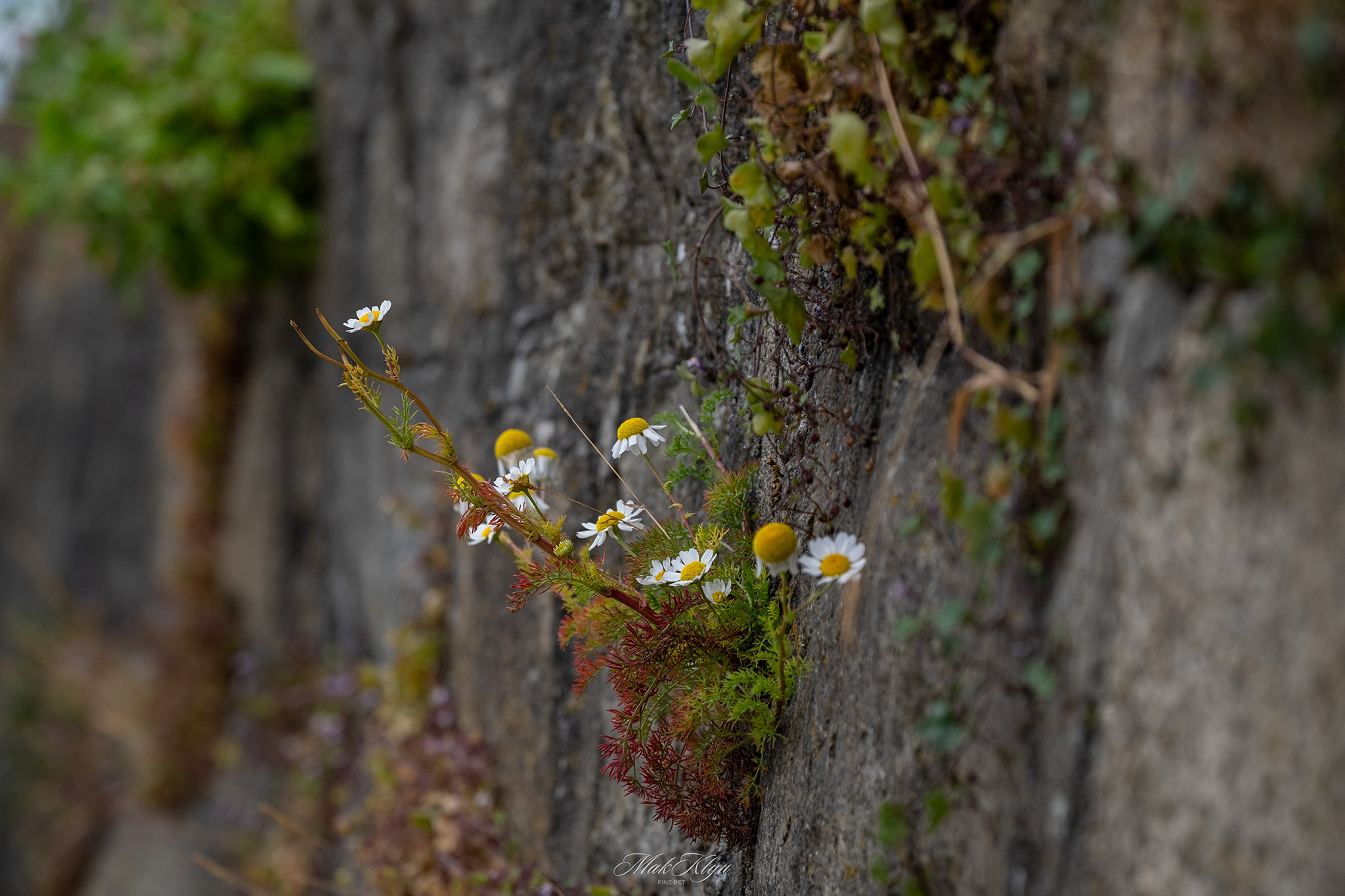
A cluster of small white flowers grows from a narrow opening in an old stone wall.
The scale is modest, but the contrast is complete: delicate stems against rough stone, temporary petals against a surface shaped by years of weather.
Learning to see such details trains the same attention required when photographing animals.
Character is often revealed through something small: the direction of an ear, a shift in posture, a glance toward a familiar person, or the moment tension gives way to trust.
These details cannot be forced.
They must first be noticed.
Presence Changes the Frame
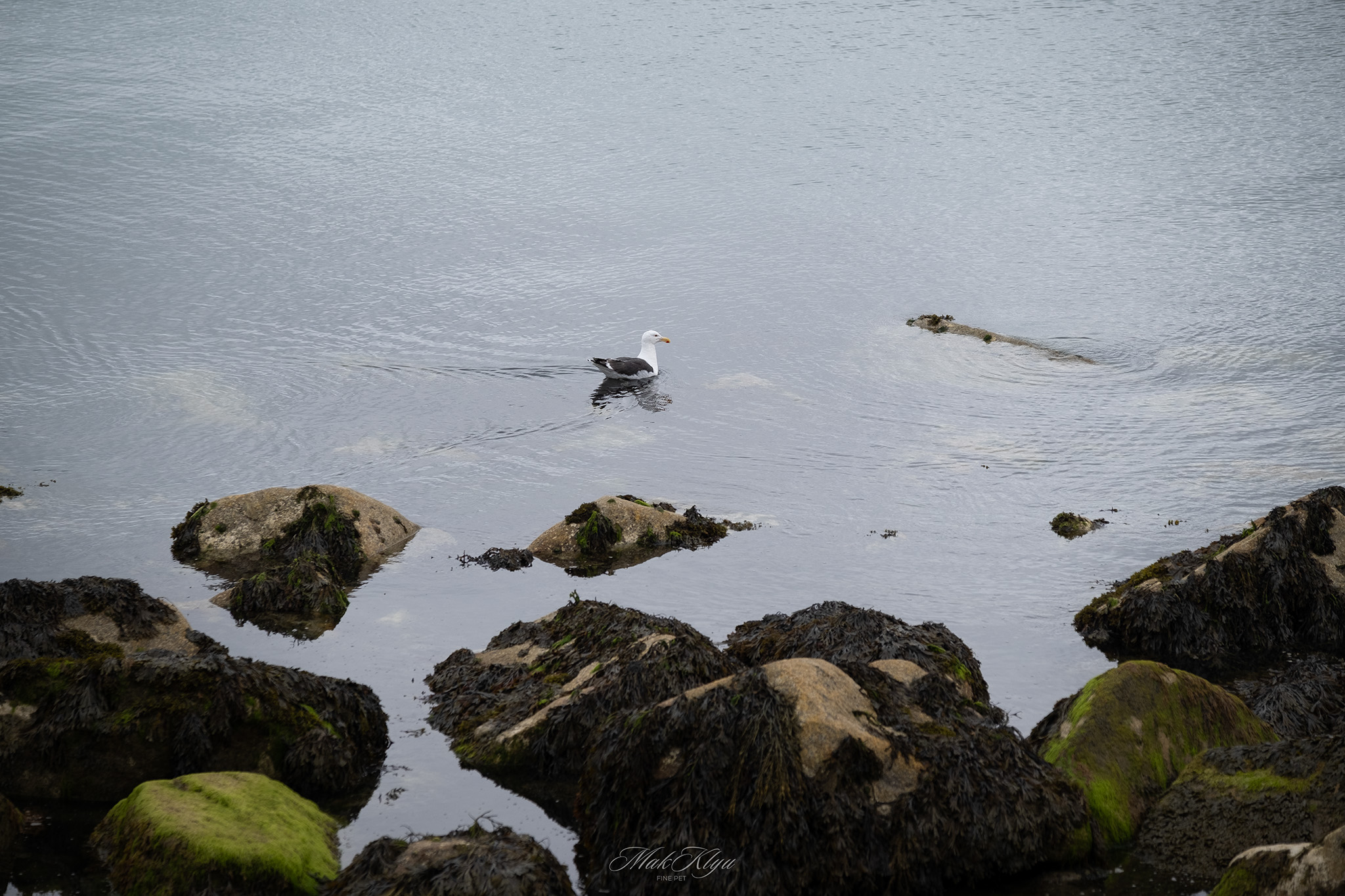
A seabird floating among rocks may occupy only a small part of the photograph, yet the entire scene reorganises around it.
Water is no longer simply a surface.
It becomes the space through which the bird moves.
The surrounding rocks become shelter, scale, and context.
This is why an animal does not need to dominate the composition to become its emotional centre.
When photographing a dog outdoors, it can be tempting to move closer, remove the surroundings, and make the subject fill the frame.
Sometimes that is the right decision.
But distance can also tell us something important.
It can show independence, curiosity, hesitation, or the way an animal belongs to a particular place.
Scale Is Part of the Story
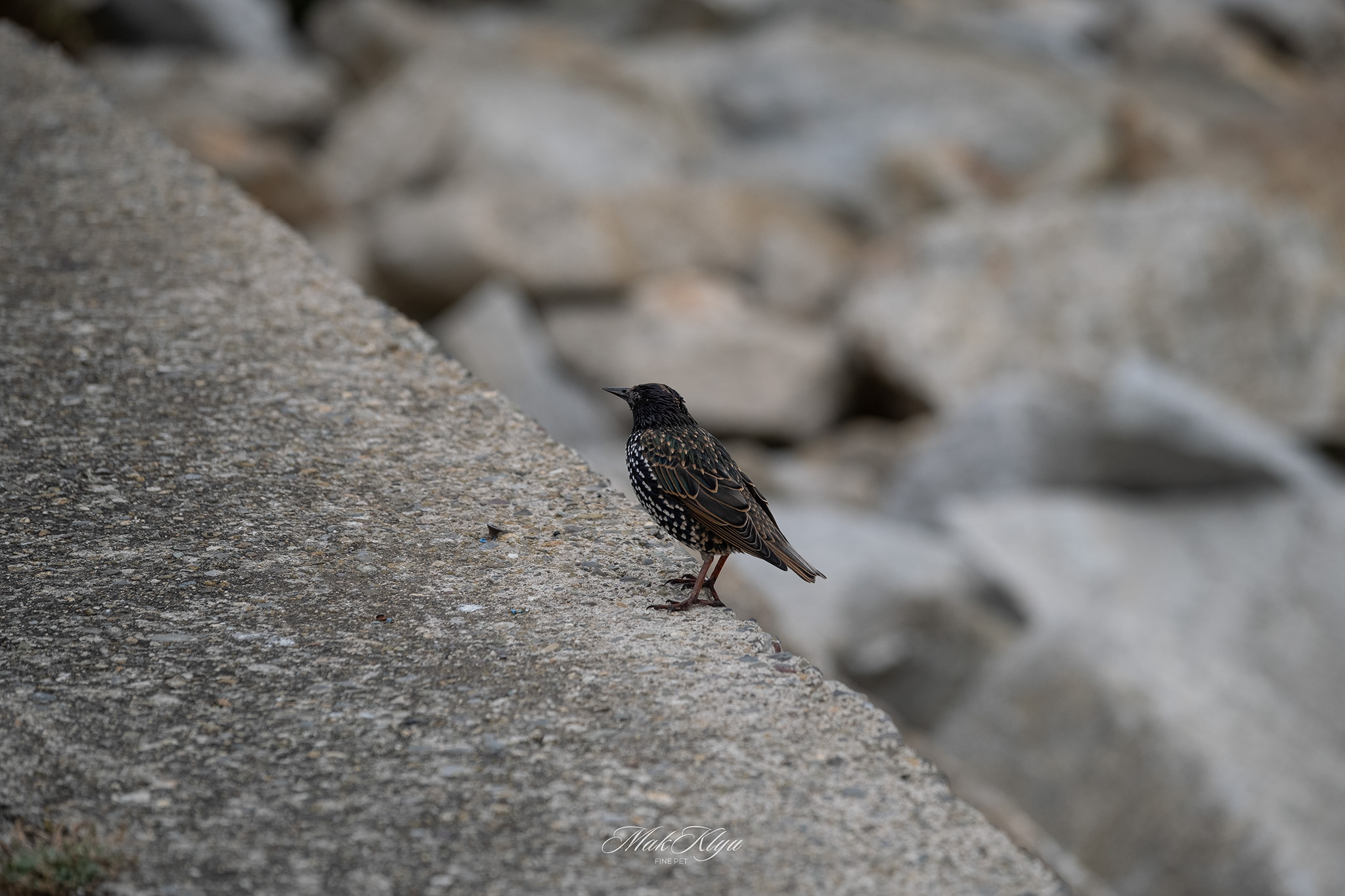
A small bird resting on a pale coastal rock is easy to overlook.
At first glance, it may seem like another dark mark within the texture of the stone.
Then the eye recognises its shape.
That moment of recognition is part of the photograph.
The viewer experiences the same act of discovery that the photographer experienced at the coast.
Scale can create this kind of visual participation.
Instead of presenting the subject immediately, the image allows it to be found.
In animal photography, a smaller figure within a wider frame can express freedom and relationship with the environment.
The landscape is not reduced to decoration behind the subject. It becomes part of the story.
The animal is present, but the world remains present too.
When Observation Is Returned
There is a particular moment when observing an animal becomes something mutual.
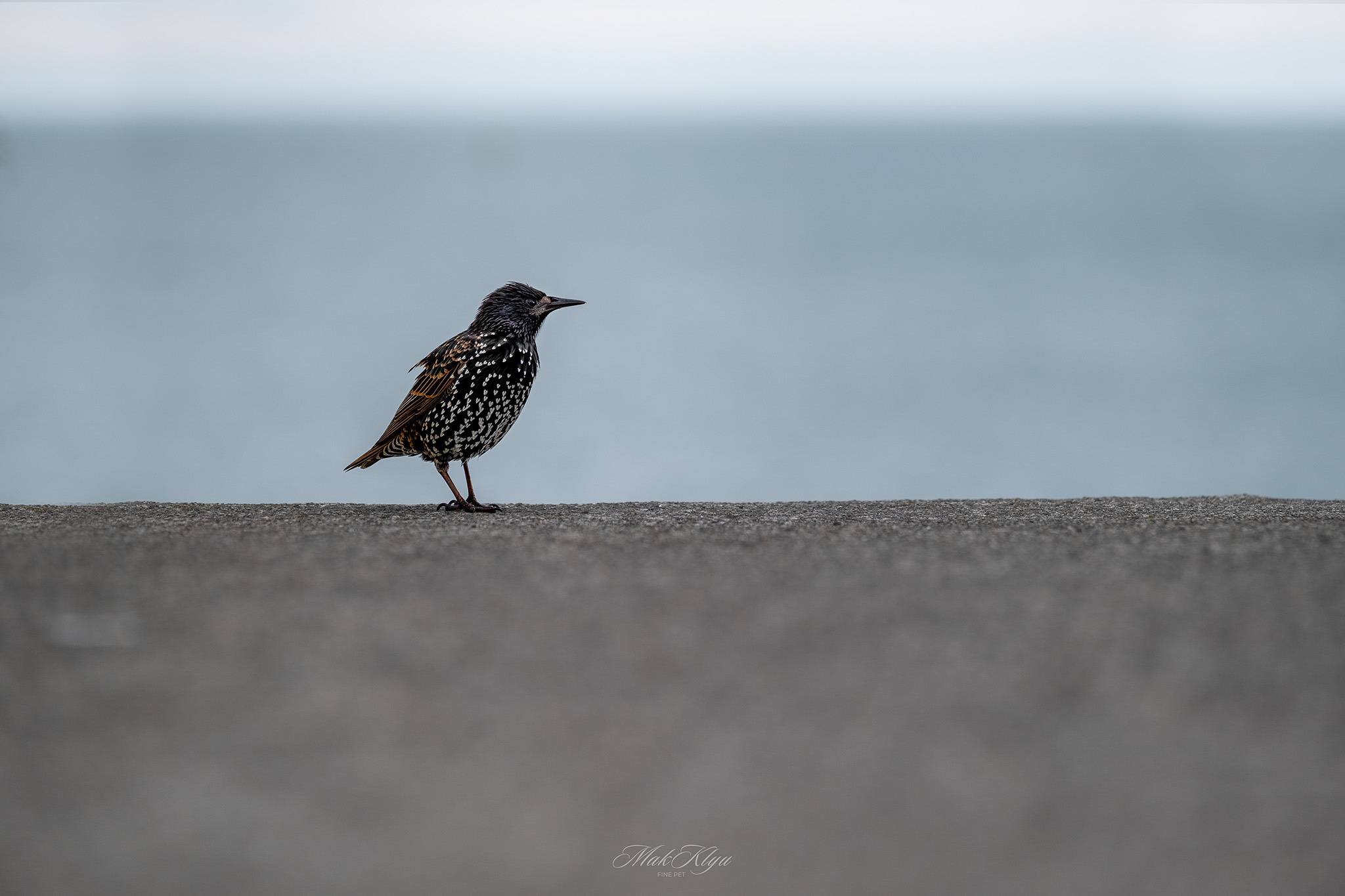
A bird walks across a stone ledge and turns its attention directly toward the camera.
For a brief instant, the photographer is no longer the only one watching.
This does not need to be a dramatic encounter.
Its strength comes from its simplicity.
One step, one glance, and a small shift in awareness are enough.
The same moment often appears during a pet photography session.
A dog may stop exploring and look toward the photographer.
It may notice the sound of the camera, search for its person, or simply become curious about the attention directed toward it.
A meaningful portrait depends on recognising this transition.
Pressing the shutter is only the final action.
The more important skill is understanding when observation has become connection.
From Observation to Connection
The lessons of the coast return naturally to photographing dogs.
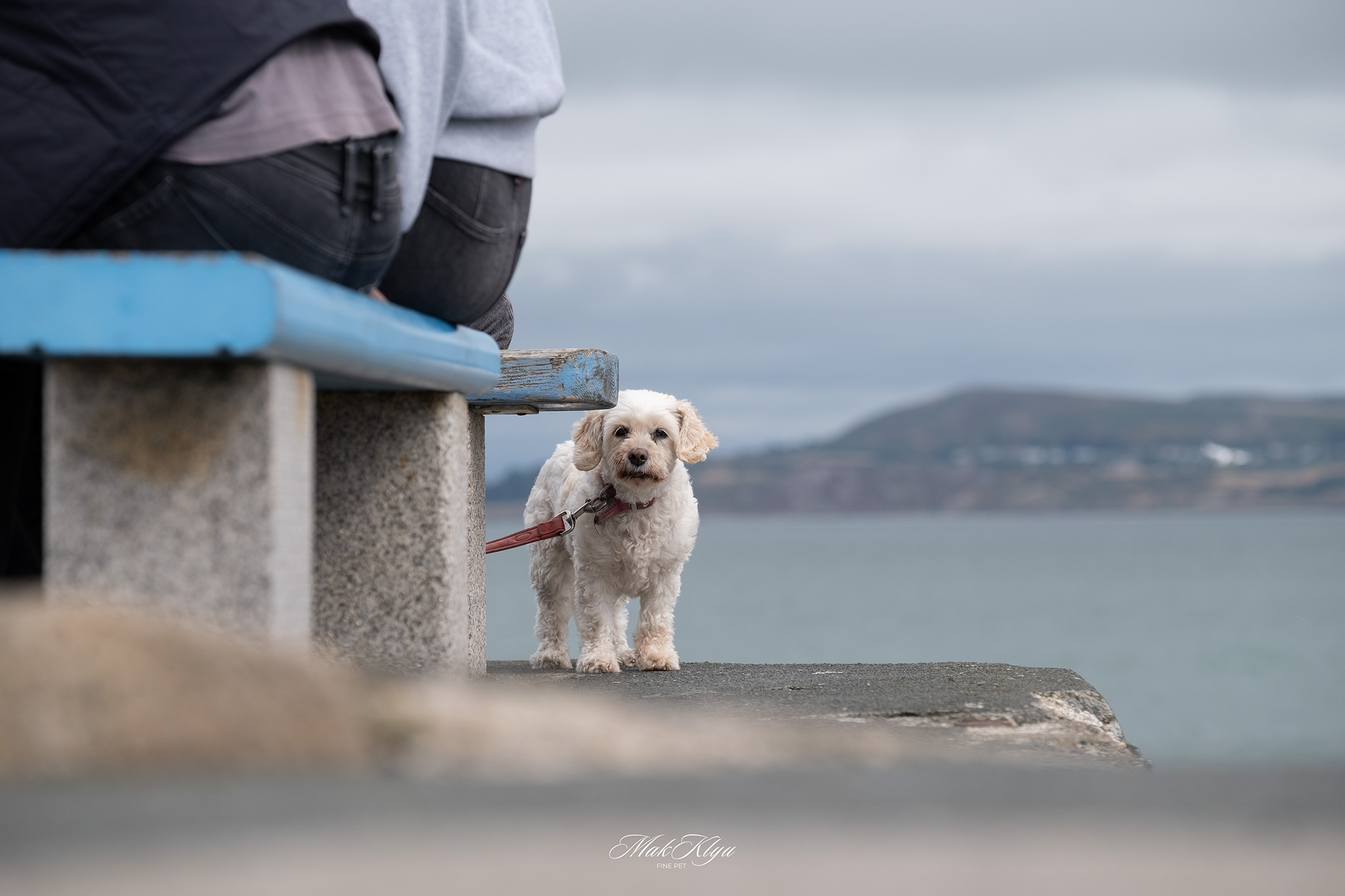
A small dog stands beside a seated person near the water.
The person faces the sea while the dog turns toward the camera.
They are not performing the same action, yet their closeness is clear.
Nothing in the scene needs to be arranged into an obvious display of affection.
Their relationship is visible through distance, position, and the quiet fact that they occupy the place together.
This is often how genuine connection appears in photographs.
It is not always found in direct touch or a perfect pose.
Sometimes it is expressed by staying nearby, waiting, looking back, or sharing a moment without interruption.
The surrounding landscape gives that connection room to exist.
The Portrait Begins Earlier Than
We Think
Photographing animals outdoors is not only the ability to respond quickly when the subject moves into the right position.
It is the practice of becoming attentive before that moment arrives.
The coast teaches us to recognise structure in open space, life within apparent stillness, and meaning within small changes.
It teaches us that scale can be emotional, that surroundings can reveal character, and that observation can become mutual without warning.
These lessons remain with the photographer when the subject is no longer a bird among rocks, but a dog moving through a forest, standing on a hillside, or waiting beside a person near the water.
The animal does not exist separately from the landscape.
The story begins when we learn to see them together.